Pick n Pay is accepting Bitcoin at thousands of stores across South Africa — groceries, airtime, municipal bills, all through a QR scan. In the same week, BTCPay Server reported that one operator processed more than $40 million in Bitcoin payments across 41,416 transactions in six months. BTC Map logged 2,500 net new merchants in April alone, with South Africa leading. And on the ground, a Nairobi community project counted 400–600 active Bitcoin users, while 98 students at Kenyatta University enrolled in self-custody workshops and paid for meals with 21 sats.
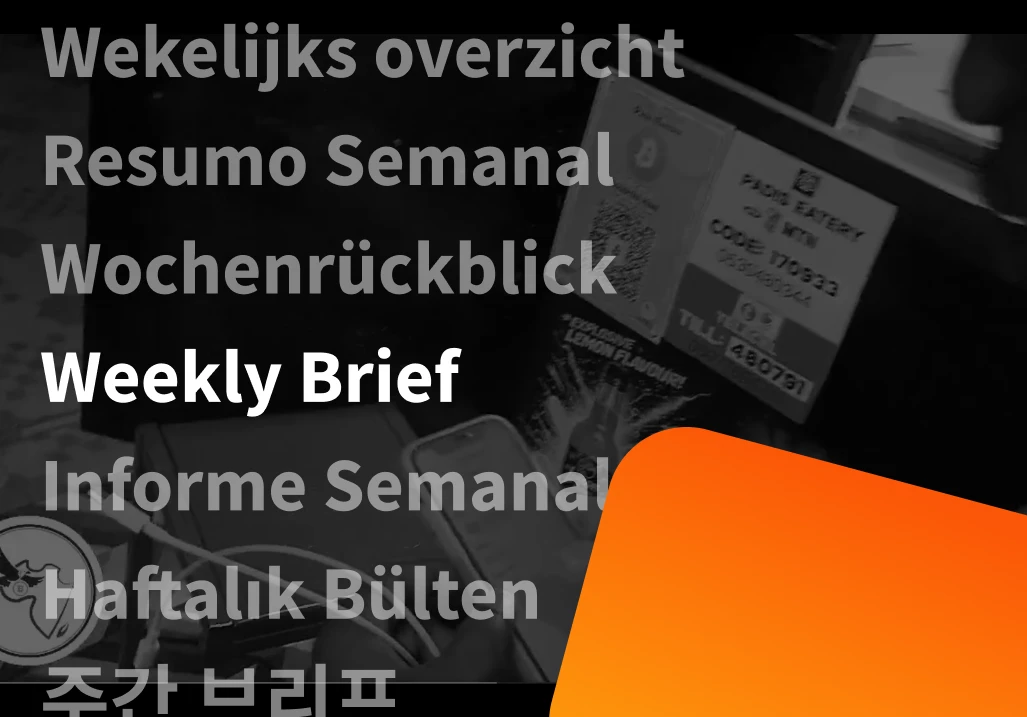
Pick n Pay — Bitcoin at thousands of South African stores: Bitcoin payments are now accepted via QR code through AquaBitcoin at Pick n Pay locations across South Africa — covering groceries, airtime, and municipal bills. This is one of the continent's largest grocery chains adding Bitcoin to checkout flows that millions of South Africans already use.
Spotlight: Unbankworld Processed $40 Million in Bitcoin Payments via BTCPay
BTCPay Server (@BtcpayServer) reported that Unbankworld — one of the oldest Bitcoin ATM networks in the United States — surpassed $40 million in Bitcoin payments across 41,416 transactions in its first six months using BTCPay's API for payment integration. This is processor-grade volume running on open-source, self-hosted infrastructure.
The number matters because it shows what happens when a mature operator adopts open-source payment rails at scale. Unbankworld is not a startup experiment — it is an established network that chose BTCPay over proprietary alternatives and processed eight figures through it in half a year.
1) Merchant & Enterprise Adoption
Merchant count data, processor-led e-commerce onboarding, and grassroots business outreach defined the week across South Africa, Bolivia, and the Dominican Republic.
- Global — BTC Map logs 2,500 net new merchants in April: BTC Map (@btcmap) reported 2,500 net new merchants added in April, with South Africa leading activity. The update also introduced saved places and custom activity feeds. The number confirms what the brief has documented for weeks — merchant onboarding through Blink, PeachPayments, and BTC Map is compounding, not plateauing.
- South Africa — PeachPayments adds four more e-commerce merchants: MoneyBadger (@MoneyBadgerPay) announced Bitcoin checkout for TravelwingsZA (safaris, all-inclusive holidays, city escapes), Flook (sports products, travel, hospitality experiences), Plume Africa (tourism), and Lug to Lug (watches and accessories) — all through PeachPayments. Four new verticals in one week through the same processor integration.
- Bolivia — more than 15 pizzerías now accept Bitcoin: Bitcoin Research (@bitcoinr3) said more than 15 pizzerías across Bolivia accept Bitcoin, with elyatiridelpueblo highlighted for maintaining acceptance during #pizzastive. Bolivia's merchant count keeps growing through food-service operators who stay active, not just announce.
- Dominican Republic — BTCPay merchant outreach ahead of Pizza Day: Bitcoin Dominicana (@btcdominicana) promoted BTCPay Server POS for local businesses and contacted roughly a dozen pizza shops, with one merchant expressing interest and a meeting scheduled. The pitch: accept Bitcoin and Lightning quickly, no technical knowledge required, instant global map visibility. "Adoption starts with one conversation."
2) Payment Infrastructure
Infrastructure signals this week came from enterprise-scale Lightning distribution data and a new AI inference marketplace that uses ecash as a native payment layer.
- United States — Square Lightning support reaches 28% of merchants: In a recent interview, Ryan Gentry said Square had launched Lightning support for 28% of U.S. merchants, calling it the biggest development for Bitcoin as a medium of exchange. He framed Lightning as the fast lane linking Bitcoin side systems, exchanges, and other payment environments — suited to micropayments, high transactional throughput, and emerging markets.
- Routstr — Cashu-powered AI inference marketplace goes live: Routstr (@callebtc) launched an open-source, decentralized marketplace for AI inference that uses Nostr and Cashu as its payment layer. Users fund balances via Lightning invoice, mint ecash, and attach it to each request as a bearer-token micropayment — no accounts, no OAuth, no subscriptions. Access to hundreds of models at chat.routstr.com. Lightning Enable (@lightningenable) separately expanded its live L402-paid API endpoints to cover SEC data, stock quotes, FX, nutrition data, geocoding, and scholarly search — all at 1–10 sats per challenge.
- South Korea — NumoPayApp at Busan flea market: NumoPayApp (@NumoPayApp) was demonstrated at a flea market in Busan organized by bitcoinpusan. Tando (@tando_me) argued that merchants can now accept bitcoin with zero blockers. A small signal, but South Korea is a new geography for the brief.
3) Circular Economy & Ground-Level Proofs
The week's deepest adoption evidence came from community projects that have moved past demonstration into sustained operation — 400+ active users in Nairobi, 98 students practicing self-custody in Kenya, and a weekly sats-pooling group buying household goods for members.
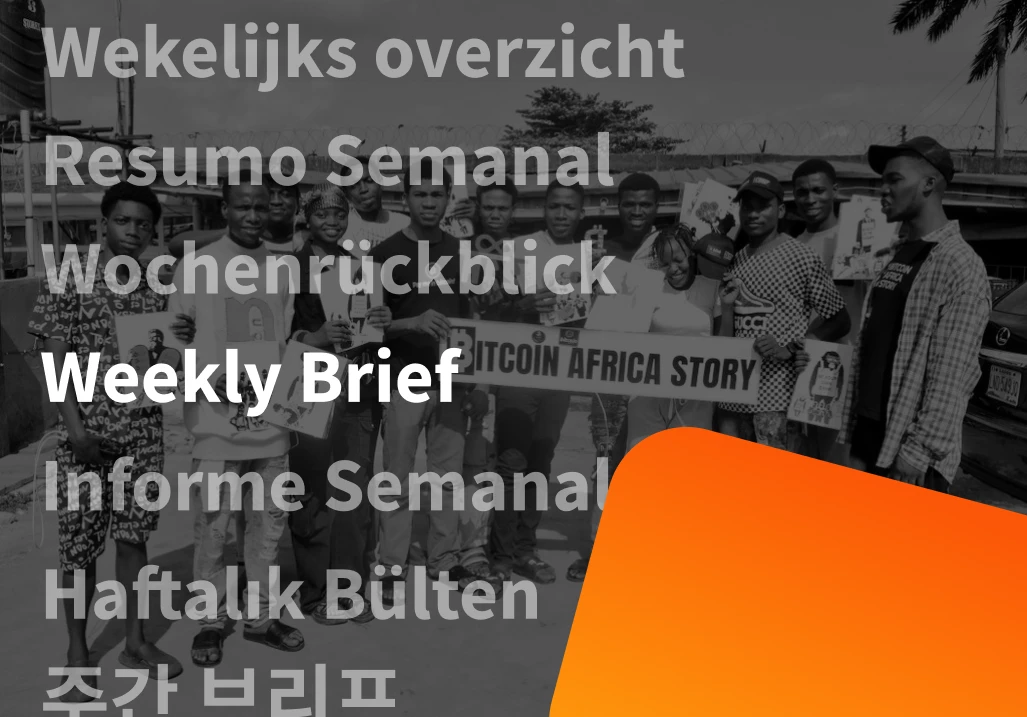
- Nairobi — Afribit Kibera counts 400–600+ active Bitcoin users: The Afribit Kibera project (@AfribitKibera, reported by @btcafricastory) said it now has 400–600+ active users with real transactions and a growing local Bitcoin economy. The operating lessons: "Trust first, Bitcoin second" and "Create earners before merchants." Users include soccer players, boda-boda riders, and reformed car wash group members — people earning and spending, not just holding.
- Kenya — 98 students enrolled at Kenyatta University Bitcoin Campus Caravan: BitEduhub (@BitEduhub) reported that 98 students enrolled during a campus event on April 30. Students practiced self-custody and permissionless payments using fedibtc, moved from faucet claims to real-time sats transactions, and paid for meals with 21 sats. Tools used: Minmo for buying bitcoin, Tando for sending to M-Pesa.
- Kenya — Bitcoin Chama Obomo help group pools sats for household needs: Members of the Obomo help group within Bitcoin Chama (@Bitcoinchama) contribute 1,100 sats weekly into a shared wallet. Each Sunday, pooled sats buy household items for one member — a mattress for Alice's family, seat cushions and a water tank for Hebisibah and Alice. This is a self-reliant savings club denominated entirely in Bitcoin.
- Mozambique — Maputo Bitdevs draws 63 people for hands-on Lightning onboarding: Bitcoin Famba (@BitcoinFamba) hosted a Bitdevs meetup in Maputo that drew roughly 63 people. Attendees installed self-custody wallets, wrote 12 backup words offline, and sent and received sats over Lightning. Fedimint concepts — ecash, offline payments, community custody — were presented alongside grassroots projects LwandiBitcoin and BitcoinDombo. "People did not just hear about Bitcoin. They used it."
- Cross-market grassroots spend: Nigeria's Tosine Gas in Ekiti, documented by Bitcoin Ekiti (@BitcoinEkiti), continued accepting sats for cooking-gas refills. Calabar Bitcoin Club paid for snacks with sats. Zambia's Bitcoin Victoria Falls (@BitcoinVicFalls) and Kenya's Bitcoin Chama continued documenting everyday purchases — rice, soap, tealeaves, water, restaurant meals — through Blink-linked merchants on BTC Map. The category list grows: laundry services in Ekiti, beauty parlours, printing shops, general stores.
From a grocery chain with thousands of stores to a help group pooling 1,100 sats every Sunday — the same payment rail, the same protocol, radically different scales. Pick n Pay adds Bitcoin to a checkout flow millions already use. Afribit Kibera builds an economy around 400 people who earn, spend, and trust each other first. BTCPay proves that open-source infrastructure can process $40 million. The pattern is not just adoption anymore — it is compounding. See you next week.