


BLOG |
Adoption stories
Hermann Buhr Vivier on the long Game of Bitcoin circular economies - Africa Bitcoin Conference 2025



The insights captured here are drawn directly from Hermann’s talk and his long-term work within the Ekasi community, reflecting real-world Bitcoin adoption built on years of trust, experimentation, failure, and persistence.
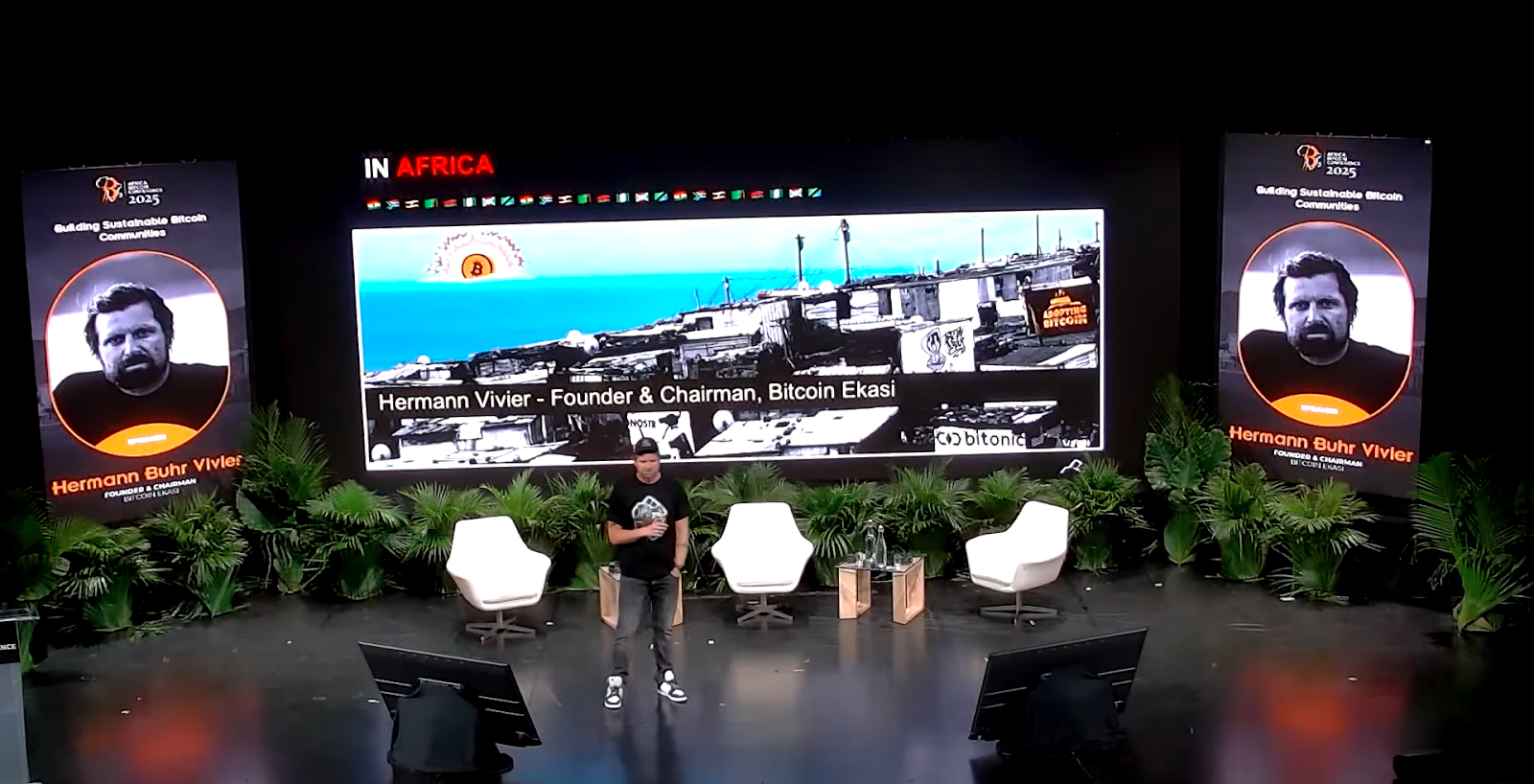
This article is inspired by Hermann Buhr Vivier’s presentation at the Africa Bitcoin Conference 2025, where he shared hard-earned lessons from building one of Africa’s most established Bitcoin circular economies: Bitcoin Ekasi.
Bitcoin circular economies don’t grow like mushrooms after the rain…
They are slow, stubborn, and deeply human!
On stage, Hermann delivered a clear reality check to builders and donors: sustainable Bitcoin ecosystems cannot be rushed or forced into existence.
Introducing his widely referenced “No Mushrooms” philosophy, he explained that real circular economies are built over years of blood, sweat, and trust, not timelines or metrics.
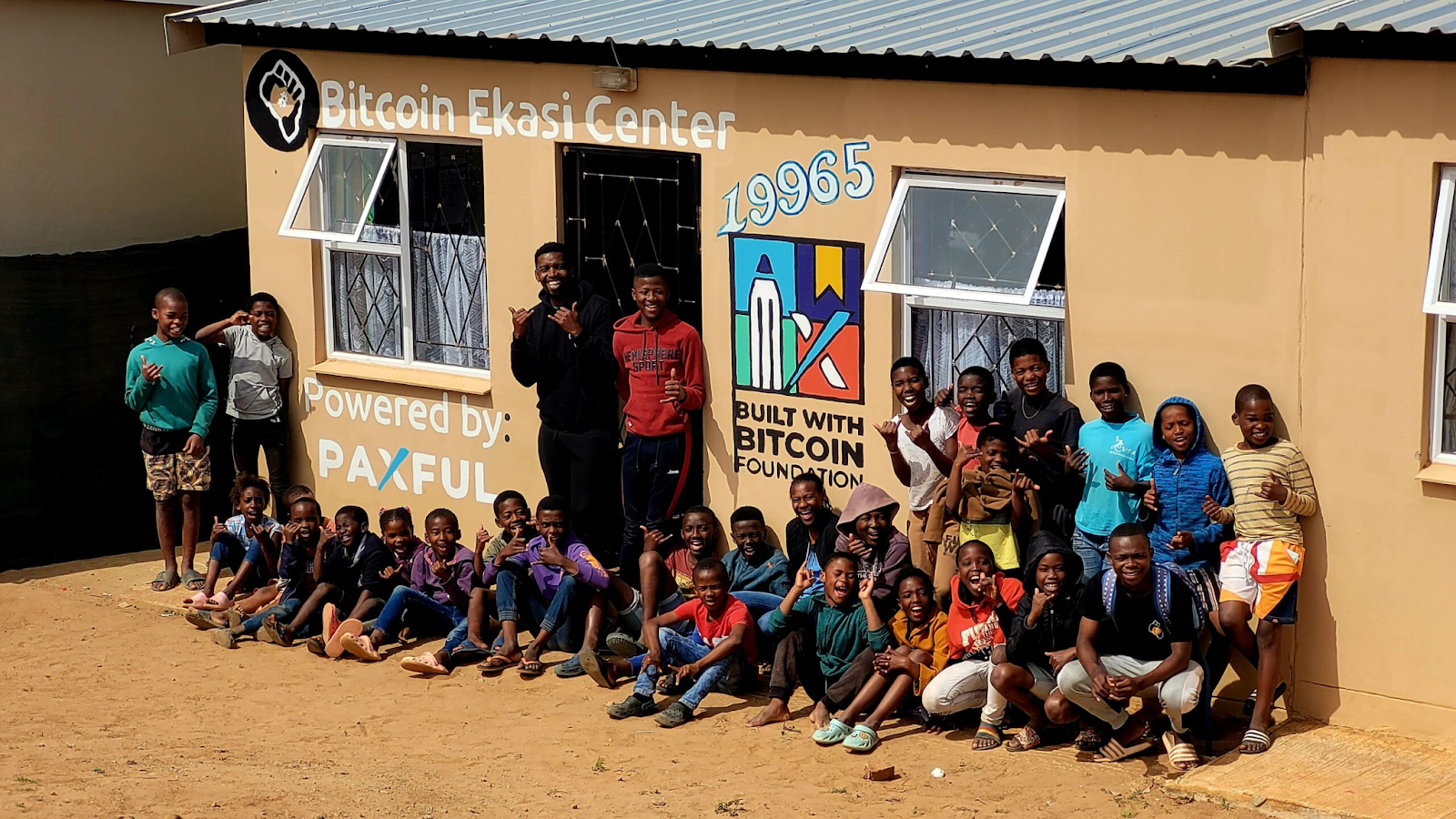
Bitcoin Ekasi, he noted, was only possible because it was layered onto more than 15 years of community work and social capital. That foundation allowed Bitcoin to be introduced organically, as a solution to real problems, rather than as an experiment imposed from the outside.
Hermann’s advocacy for Bitcoin as a medium of exchange (MoE) rather than just a store of value (SoV) comes from personal experience.
He shared that he didn’t discover Bitcoin because of its price appreciation narrative.
Instead, Bitcoin became essential in 2015, when he and his wife were running a tourism business and found themselves “stuck behind sanctions,” unable to receive payments from international clients through traditional banking systems.
Bitcoin became a lifeline, allowing them to receive and use money across borders when legacy financial rails failed. This real-world use case marked the beginning of Hermann’s Bitcoin journey, long before Bitcoin Ekasi was ever conceived.
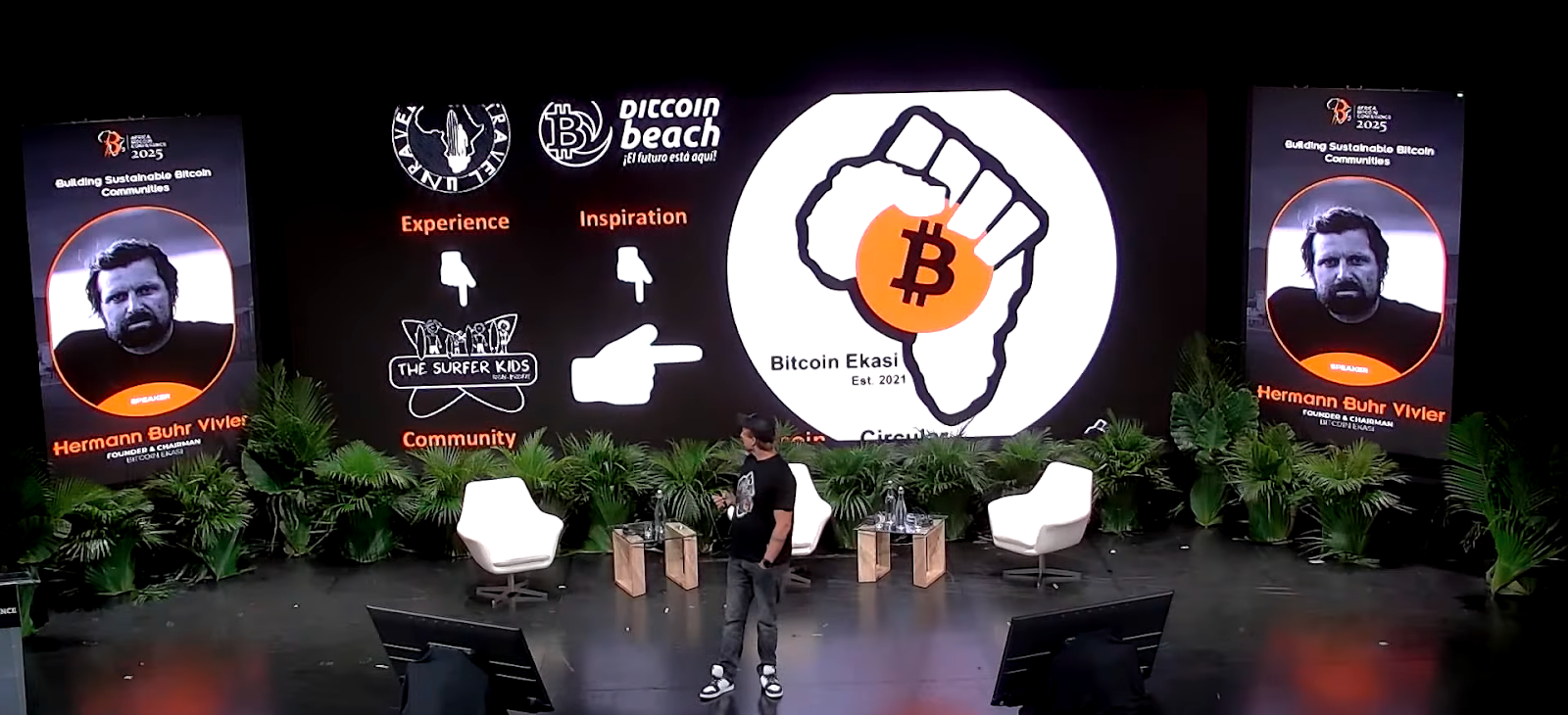
Before Bitcoin Ekasi became a recognized Bitcoin Circular Economy (BCE), several critical layers were already in place.
Hermann's experience as he built his business, Unravel Surf Travel, with Bitcoin, together with the inspiration from Bitcoin Beach in El Salvador, and The Surfer Kids NPO, a community organisation he’s been running for over 15 years, culminated in the Bitcoin Ekasi project.
The project did not emerge suddenly. While it gained early attention, it took many years of consistent effort to become established.
Hermann emphasized that many new Bitcoin Circular Economies fail because they overlook this truth: successful BCEs are almost always built on foundations that existed long before Bitcoin was introduced.
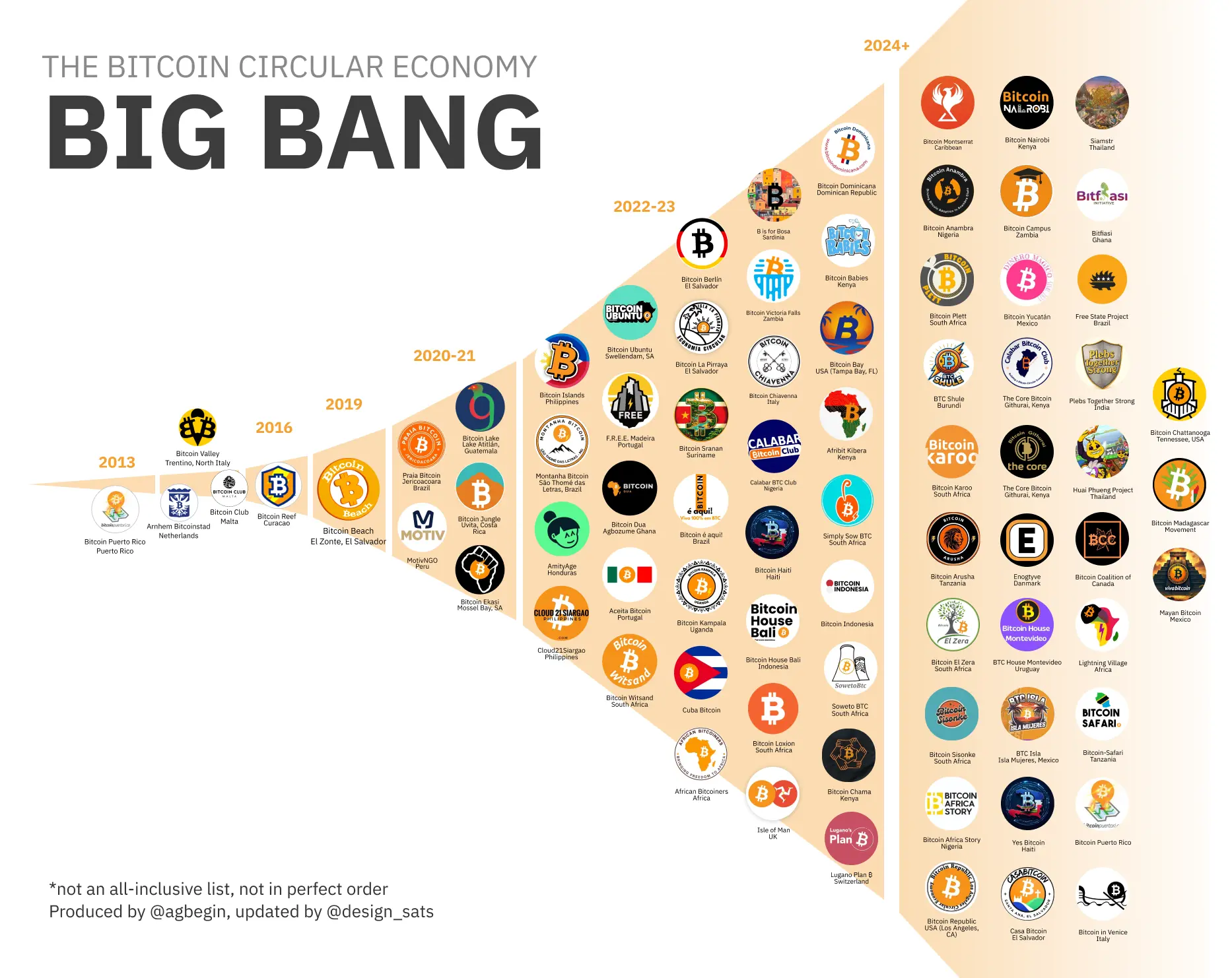
A Bitcoin Circular Economy focuses on earning, spending, and saving Bitcoin within a specific community.
For Hermann, the goal is simple but powerful: Bitcoin earned locally should stay within the community, circulating peer-to-peer (P2P) rather than leaking back into fiat systems.
Importantly, Hermann stressed that the success of a Bitcoin Circular Economy is not measured by size, but by the frequency and density of usage.
Hermann’s insights challenge how BCE success is often measured. He shared the following key points:
He added:
Across Africa, Bitcoin circular economies like Bitcoin Ekasi, Bitcoin Witsand, Afribit Kibera, Bitcoin Kampala, Bitcoin Anambra, Bitcoin Victoria Falls, and the other BCEs are steadily taking shape, driving grassroots adoption and demonstrating Bitcoin’s real-world utility beyond speculation.
As more initiatives emerge, the lessons from pioneers like Bitcoin Ekasi remain essential. By onboarding local merchants to accept Lightning payments and encouraging communities to earn, save, and spend in the same currency, these projects are laying the groundwork for resilient financial systems outside failing fiat rails.
Hermann’s message at the conference was clear: stop chasing quick wins. Sustainable Bitcoin circular economies are built on long-term commitment, patience, and deep community trust.
PS: If you missed the Africa Bitcoin Conference, you can watch Hermann’s full session alongside insights from other speakers in the recorded livestream: Africa Bitcoin Conference 2025 – Day 1 Afternoon (Hermann’s session begins at 13:24).
Start receiving and sending bitcoin now


